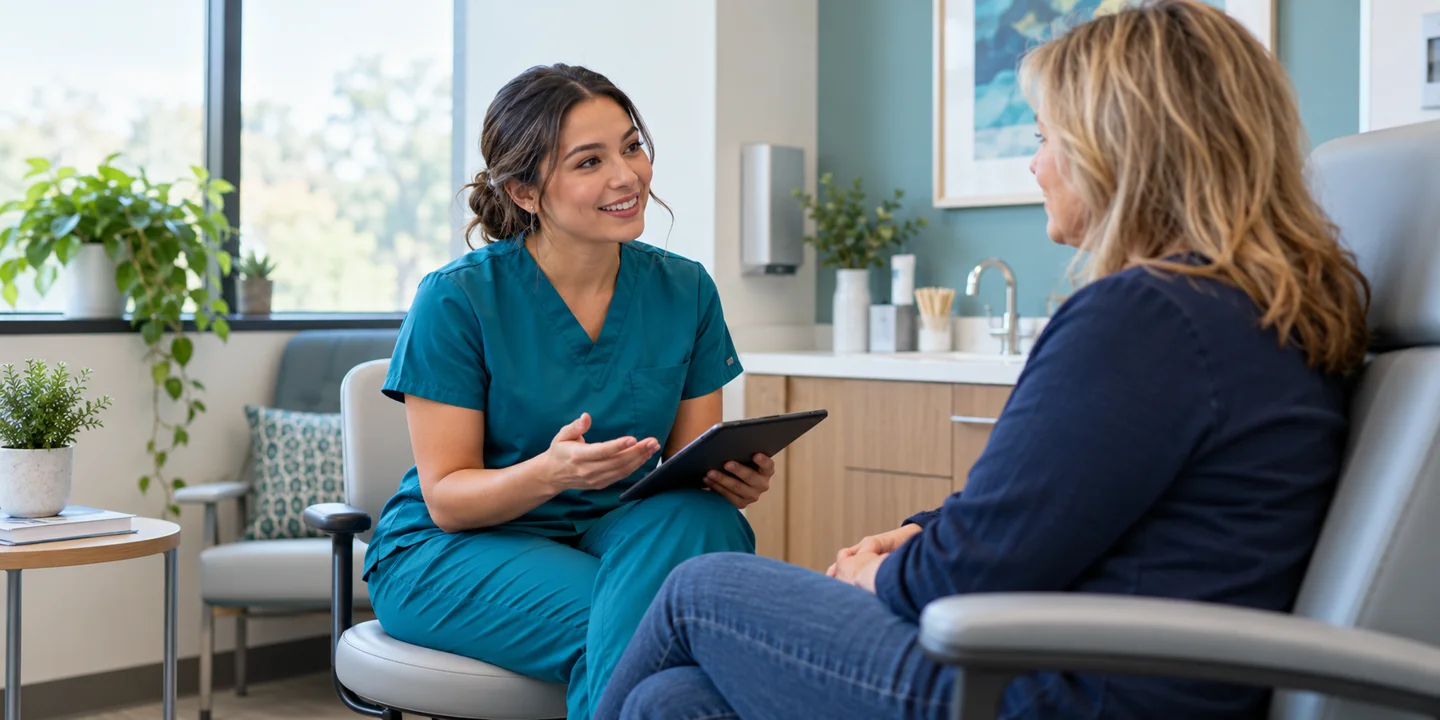
Are you interested in nursing opportunities outside an inpatient hospital unit? Outpatient nursing jobs offer opportunities to support patients through office visits, treatments, procedures and ongoing care.
The key is understanding what each position involves. A primary care clinic, an outpatient surgery center and a specialty practice can offer very different responsibilities and schedules.
This guide explains where to look for outpatient RN jobs, how to compare opportunities and how to show employers that your experience fits their needs.
What Are Outpatient Nursing Jobs?
Outpatient nursing positions involve caring for patients who receive services without being admitted for an inpatient stay. Depending on the setting, nurses may help with assessments, patient education, treatments, care coordination and follow-up.
Employers may advertise these opportunities under several titles:
- Outpatient registered nurse
- Clinic nurse
- Ambulatory care RN
- Primary care nurse
- Specialty clinic RN
- Outpatient surgery nurse
- Infusion nurse
- Telephone triage nurse
Read the full job description before applying. Similar titles can describe substantially different work.
Where Do Outpatient Nurses Work?
Primary care practices
Primary care nursing may involve supporting preventive visits, managing patient messages, providing education and coordinating follow-up. Ask how the practice divides responsibilities among nurses, medical assistants and other team members.
Specialty clinics
Cardiology, orthopedics, dermatology and other specialty practices need nurses whose skills match their services. Some employers seek prior specialty experience; others may offer training for nurses with relevant clinical backgrounds.
Ambulatory surgery centers
These positions may focus on preoperative preparation, procedural support or recovery. Check the employer’s experience requirements, required credentials and expectations for emergency response.
Infusion and treatment centers
Infusion positions can involve administering prescribed treatments, monitoring patients and documenting their response. Requirements vary by treatment type and employer, so review the qualifications carefully.
Community health centers
Community settings may combine direct care, education, follow-up and coordination with outside services. Ask about the patient population, available resources and support for complex care needs.
Do Outpatient Nursing Jobs Offer Better Hours?
Some outpatient practices operate mainly during weekday business hours. Others offer evening appointments, weekend services, extended treatment hours or on-call coverage.
Avoid assuming that “outpatient” automatically means a Monday-through-Friday schedule.
Before accepting an interview, confirm:
- The actual start and end times
- Weekend, holiday and on-call requirements
- Whether hours are guaranteed
- Whether staff rotate among locations
- How frequently appointments or procedures run beyond scheduled hours
- Whether the position includes inbox or telephone responsibilities outside scheduled shifts
A schedule is only a good fit when you understand the complete commitment.
Skills to Highlight When Applying for Clinic Nurse Jobs
Your application should connect your experience to the work described in the posting.
Relevant skills may include:
Patient assessment: Recognizing changes in condition, gathering relevant information and escalating concerns through established procedures.
Patient education: Explaining instructions clearly and checking patient understanding.
Care coordination: Supporting referrals, follow-up appointments and communication among care teams.
Documentation: Recording assessments, interventions and patient communication accurately.
Organization: Managing competing priorities while maintaining attention to detail.
Team communication: Working effectively with providers, nurses and administrative staff.
Include only skills and procedures you can accurately support with your experience.
How to Move From Bedside Nursing Into Outpatient Care
1. Choose a setting before rewriting your resume
Identify the patient population and type of work you want. Your application will be more focused if you target a specific setting rather than every opening with “clinic” in the title.
2. Translate your experience
Help the hiring manager see how your background applies.
For example, if accurate, a resume bullet could read:
“Coordinated discharge education and follow-up needs with patients, families and interdisciplinary teams.”
That statement gives an outpatient employer useful evidence of communication and care coordination.
3. Review the qualification gaps
Separate required qualifications from preferred experience. Check whether the position requires particular specialty experience, credentials or prior work with specific patient populations.
Describe your transferable experience honestly and ask what training is available.
4. Prepare a clear reason for your transition
Explain what attracts you to the role: continuity of care, patient education, a particular specialty or a different care environment.
A specific explanation helps employers understand your interest in their practice.
Questions to Ask During an Outpatient Nursing Interview
Use the interview to understand how the clinic operates:
- What does a typical day look like for the nurse in this position?
- How are patient calls, portal messages and urgent concerns assigned?
- What training and orientation are provided?
- Which procedures or competencies must I demonstrate?
- How does the team cover absences and busy periods?
- How much work involves direct patient care versus coordination and documentation?
- How is success measured during the first 90 days?
These questions can reveal expectations that are difficult to judge from a job title alone.
How to Search for Outpatient Nursing Jobs
Search with several related terms, including “clinic RN,” “ambulatory care nurse,” “outpatient registered nurse” and your preferred specialty.
Combine those terms with your city, state or commuting area. Compare each opening against your priorities for schedule, compensation, responsibilities and professional growth.
Start with RN Nation’s nursing and healthcare job search, then review the employer’s full description and application instructions. You can also explore RN Nation’s career resources to prepare your resume and interview questions.
Frequently Asked Questions
Can a hospital nurse apply for outpatient nursing jobs?
Yes. Hospital experience can provide relevant assessment, communication and care coordination skills. Eligibility depends on the employer’s requirements and the responsibilities of the position.
Are all clinic nurse jobs the same?
No. Duties vary by specialty, patient population and staffing model. Review the full description and ask how the nursing role works within that particular practice.
Are outpatient nursing jobs less stressful?
The demands are different across settings. Clinics can involve high patient volume, urgent calls, complex treatments and competing priorities. Ask about workload, staffing and support before deciding whether a position fits your needs.
Do outpatient nursing jobs require experience?
Some employers require prior nursing or specialty experience. Others may consider applicants with different backgrounds and provide orientation. Check the individual posting rather than assuming all outpatient roles have the same entry requirements.
Find an Outpatient Nursing Role That Fits Your Goals
The right outpatient nursing job should match your clinical strengths, preferred work environment and longer-term career plans.
Look beyond the title, ask detailed questions and tailor your application to the actual responsibilities.
Ready to explore your next opportunity? Search nursing and healthcare jobs on RN Nation.